What Is KNX and Why Does It Matter for Smart Buildings?
KNX vs. conventional building control: what changes and when each approach makes sense.
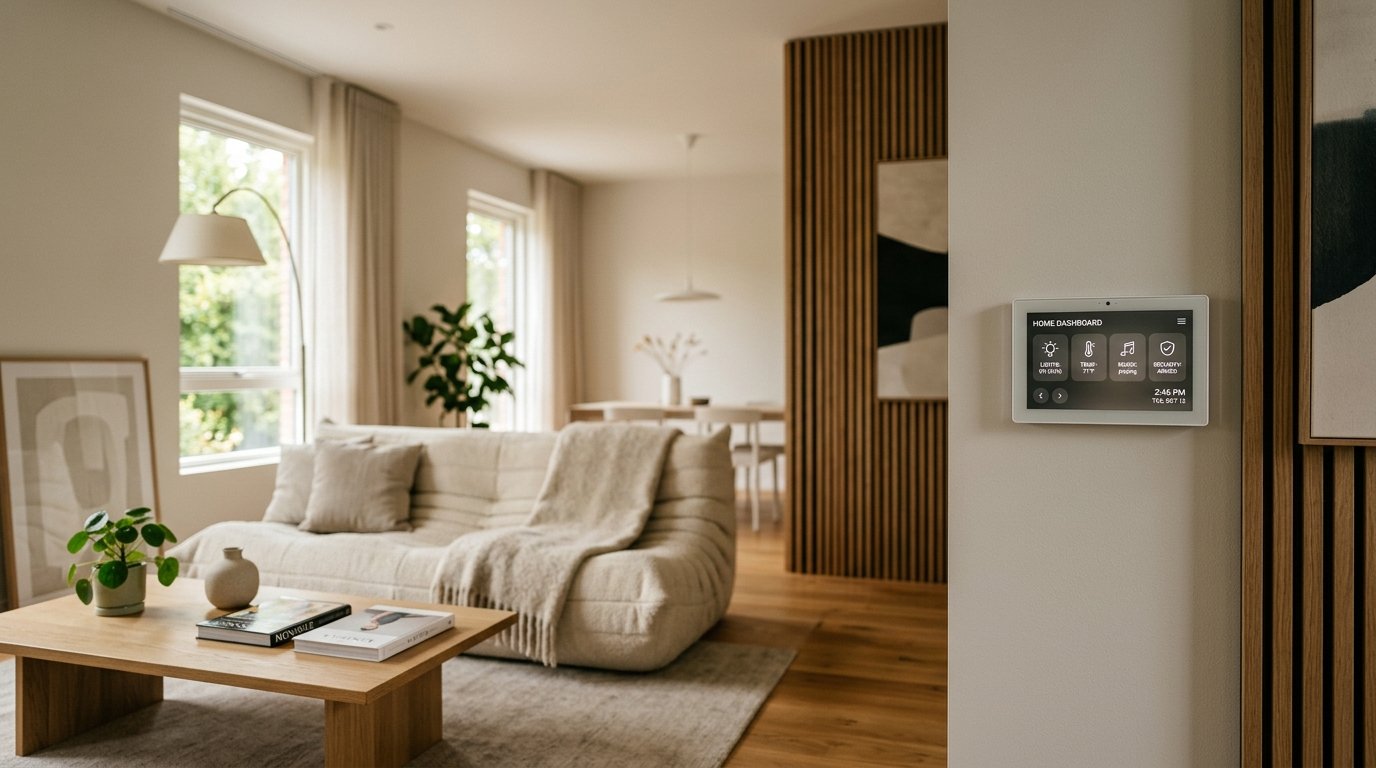
KNX is an open, standardized protocol used to connect and control building systems such as lighting, shading, climate and security from a single, coordinated layer. Unlike conventional wiring, where each function — a light switch, a thermostat, a motor for shading — is wired and controlled independently, KNX devices communicate over a shared bus, allowing them to be programmed, grouped and adjusted as a system.
The practical difference shows up in day-to-day use. With conventional control, changing how a room behaves — for example, adding a new lighting scene or linking blinds to a temperature sensor — often means rewiring or adding switches. With KNX, the same change is usually a matter of reprogramming the logic, since the physical wiring already supports flexible control.
KNX is not automatically the right choice for every project. Smaller residential projects, or buildings with simpler control needs, sometimes make more sense with wireless protocols such as ZigBee or Z-Wave, which can be added without extensive new cabling. The right approach depends on the size of the building, the budget, and how much flexibility the client expects over the system's lifetime.
During consultation, we assess the building's requirements and recommend whether KNX, a wireless protocol, or a hybrid approach fits the project best, rather than defaulting to one technology regardless of the context.